
Under Construction
LIST OF DEVELOPERS
Multilateral Development Banks spend less than 2% of budgets on key energy access solutions

The world’s multilateral development banks (MDBs), taxpayer-funded institutions charged with helping end global poverty, are still not moving fast enough to scale up their support for energy solutions that would reach the world’s poorest the fastest, concludes a new report from Oil Change International.
The report was released today, as the UN Economic Commission for Africa’s Conference on Climate Change and Development gets underway in Nairobi.
One billion people around the world lack access to electricity, and nearly three billion still rely on polluting solid fuels like wood or charcoal for cooking. To address this challenge, the Sustainable Development Goals aim to deliver universal energy access by 2030.
But while the MDBs have endorsed this goal, this new report, titled 'Shortchanging Energy Access: A Progress Report on Multilateral Development Bank Finance', shows that from 2014 through 2017, MDBs directed just 2% of their energy finance toward the off-grid and mini-grid energy solutions that are the most impactful ways to close the electricity access gap.
According to the International Energy Agency, to achieve universal electricity access by 2030, off-grid and mini-grid solutions would account for more than two-thirds of additional electricity supply investment.
To the contrary, MDB financing for off-grid and mini-grid energy solutions declined significantly from 2016 to 2017, the report finds.
Support for clean cooking fared even worse: only 1.6% of MDB energy finance supported clean cooking solutions, according to the analysis released today.
“We need multilateral development banks to finance those energy solutions that can reach the poorest fastest. They shouldn't continue to pour money into fossil fuel projects, few of which have a clear link to energy access. Off-grid and mini-grid solutions should be a central part of these institutions’ plans, especially in regions with the lowest rates of energy access, including Africa,” said Thuli Makama, Africa Senior Advisor at Oil Change International.
“Good intentions won’t deliver energy access and clean cooking solutions to the billions of people who suffer without them today,” said Alex Doukas, Program Director at Oil Change International.
“If multilateral development banks keep directing only 2% of their energy finance toward the most-needed energy access solutions, there is little hope of meeting the global goal of universal energy access by 2030.”
Institutions assessed in the report include the World Bank Group, African Development Bank, Asian Development Bank, Inter-American Development Bank, and the European Bank for Reconstruction and Development.
Of the billions of dollars MDBs continue to provide to fossil fuels, the analysis found that just 9% contained elements that support energy access for the poor.
Some MDBs have argued that they are doing more to advance energy access goals than the numbers suggest. However, as the report notes, these institutions do not track finance for energy access or progress toward energy access goals in a consistent, harmonised way, making it difficult to assess claims about their energy access finance.
The analysis finds some bright spots: of the limited MDB finance directed at improving energy access for the poor, nearly two-thirds went to countries with the largest number of people without access; with nearly half of this finance targeting sub-Saharan Africa, the region with the greatest share of the global population without energy access.
The report also notes that, unlike the other MDBs, the AfDB has set quantitative targets for energy access, and tracks new connections from off-grid energy and household access to clean cooking in its Results Measurement Framework.
The report recommends MDBs (i) direct at least half of their energy finance to projects focused on advancing energy access for the poor and/or rural areas; (ii) support distributed renewable energy and clean cooking solutions so that these solutions receive at least one-third of total MDB energy finance; and (iii) set clear targets for energy access and collectively track energy access finance and its outcomes.
Date
Exploring the age of wireless power with IoT
South Africa

Anti-interference, low latency, low power consumption and easy evolution eLTE-DSA explores the age of wireless power IoT.
By Wei Ke-Tai, Huawei Enterprise Wireless Marketing Support Department
In our current and ongoing technology and industrial revolution, combined with accelerating urbanisation, industrial structures are being optimised and upgraded. In concert, the scale of the power grid continues to expand due to the integration of distributed energy, charging piles that help improve assurance capability, power supply reliability and power quality of urban distribution networks.
Governments the world over are working to promote an energy production and consumption revolution. The goal is to build a highly efficient, clean and environmentally friendly smart grid system that fully supports the construction of the modern energy system. One example is the EU 20-20-20 plan that seeks to increase energy efficiency 20% by 2020, reduce CO2 emissions 20% and increase the proportion of distributed renewable energy by 20%. Britain, Germany and France also have clear requirements for renewable energy and electric vehicles.
Power distribution automation coverage
Meanwhile in China, the National Energy Bureau has required the national power distribution automation coverage rate to be increased from 20% in 2014 to 90% in 2020.
As a result, with the grid-connection of these distributed systems and the scale placement of electric vehicles, the power grid source balance requires more timely visual load forecasting and more precise load control. To make this a reality, all power distribution terminals need to be connected and the communication network becomes the key and foundation.
In China, after years of development, the electric power private network has formed a backbone communication network mainly based on dedicated optical fiber communication networks. The dispatching control centers, high-voltage substations, office organisations and branches of China Unicom have been formed.
However, figuring out how to connect the power equipment in cities, industrial areas and rural areas to the network is a difficult problem for the comprehensive interconnection of the power grid.
Wireless network
Compared with optical fiber networks, wireless network deployment is more flexible. Wireless networks can be quickly deployed in old urban areas or in some private land areas, which can help meet the requirements of future capacity expansion. Considering the requirements of security, reliability, stability and fast response, the wireless private network solution becomes the inevitable choice for realising the "last mile" of the power communication network.
eLTE-DSA - wireless private network
According to the global spectrum, the UHF/VHF narrowband spectrum used in the traditional industry is the most easy to obtain band for use in electric power wireless private network construction. Traditional data radio stations on this frequency band use the 1G narrowband technology. Unfortunately, in terms of delay, throughput and device capacity, it is difficult to meet the requirements of more precise control, device expansion and service expansion for future smart grids with this spectrum.
To remedy this situation, Huawei launched the eLTE-DSA solution based on 4.5G and 5G evolution. With industry-leading RF and filtering capabilities and some 5G algorithms, Huawei's industry-leading RF and filtering capabilities aggregate UHF/VHF discrete narrowband spectrum resources and implements LTE technologies on the UHF/VHF discrete spectrum.
The advantages of this include anti-interference, low latency, low power consumption, easy evolution and easy expansion. It is the best choice for fully constructing the power IoT.
High-performance, secure and reliable
In terms of security and reliability, this solution is based on the most advanced and mature SingleRAN platform in the industry and has the strongest RF and narrowband filtering capabilities in the industry. In addition, the advanced algorithms such as frequency hopping and channel backup are introduced to ensure the coexistence of the UHF/VHF frequency band and the inter-RAT system ensures secure and reliable data transmission.
In terms of fast response, the eLTE-DSA adopts the 3GPP standard 10 ms ultra-short frame structure and introduces the 5G Grant free scheduling algorithm. These technologies achieve and guarantee latency below 20 ms in the downlink and a maximum 4000 connections per cell. This enables it to meet the requirements of low delay control such as precise load control in various complex radio environments.
In terms of service expansion, the static power consumption of the eLTE-DSA terminal module is less than 0.15w. Before the power distribution automation service, the eLTE-DSA terminal module can fully meet the requirements of power IoT applications such as intelligent meter reading and fault indicators. In terms of evolution, thanks to the standard 4.5G underlying protocol and the latest hardware platform, eLTE-DSA can continuously evolve to 5G to meet new requirements of electric power applications.
Standardisation and industrialisation process
In 2018, Huawei joined the State Grid to actively promote the eLTE-DSA standard and industrialisation process, making a number of achievements over time. In April, the national network and Huawei reached a consensus: the two parties would jointly build the industry's highest level and the world's leading wireless power IoT. The IoT-G 230MHz (eLTE-DSA technology) is included in the State Grid Corporation of China (SGCC) 230 enterprise standard. At the same time, Guodian and Huawei set up a joint innovation lab to conduct joint innovation based on eLTE-DSA and cooperate comprehensively in standards internationalisation, product and tool R&D, equipment and service testing.
In August 2018, Huawei successfully held the 2018 Power 230 Wireless Industry Conference in Chengdu. Thanks to its advanced technology, standard openness and Huawei's industry promotion capability, Huawei has helped multiple industry partners to develop eLTE-DSA (IoT-G 230MHz) products. These have, in turn, quickly built the industry ecosystem and helped to jointly promote the construction of the electric power wireless private network.
In addition, Huawei and SGCC actively promoted the internationalisation of the IoT-G standard (eLTE-DSA) and promoted the standards, technologies and successful experience of China's wireless private network to the world.
Huawei's fully-connected grid solution has served 13 of the world's Top 20 power companies and has been widely used in 73 countries worldwide, serving more than 190 electric power customers. Examples of companies it serves around the globe include the State Grid Corporation of China (SGCC), E.ON in Germany, and ENEL in Italy.
In the future, Huawei will continue to work and innovate in an open and cooperative manner. Huawei will work with electric power customers and the best partners to promote the development of the electric power wireless private network industry and jointly help the full-service ubiquitous power IoT construction. Furthermore, Huawei will promote the development of smart grids and the growth of the energy Internet to achieve digital transformation and upgrades across the entire industry.
Date
Add New Comment
South Africa: Weaning Itself Off Coal
South Africa

Following a few years of sluggish growth, in August 2016, South Africa pulled ahead of Nigeria, which has a population three times as large, to again become the largest economy in Africa, according to the International Monetary Fund (IMF). The country has a solid list of achievements: its demographic growth is now under control, its school attendance rate is the highest in Sub‑Saharan Africa, it attracts the most foreign investment on the continent and, according to statistics, 85% of its population has access to electricity.
South Africa has a huge energy appetite. It accounts for nearly 30% of the continent’s total energy consumption but only 4.6% (55.4 million people) of its population2. It has the biggest vehicle fleet on the continent: 180 vehicles per 1,000 inhabitants – North Africa only recently passed the 100 mark – compared to an average of 44 for the continent as a whole3. In addition, final oil product consumption rose by 20% from 2004 to 2014.
An Aging Grid and the Dominance of Coal
South Africa has two weaknesses, however:
- Due to a lack of adequate investment, the country’s electrical grid is in bad shape (one third of power stations are routinely idled), and networks continuously operate near full capacity. In the face of rapidly growing demand, the state power utility Eskom must frequently resort to load shedding. Not only does this pose problems to the population, especially in the poorest areas, it seriously hampers industrial activity, costing the economy one percentage point of annual growth, according to the government’s own estimates.
- Like China and India, South Africa’s dominant source of energy is coal, which provides 92% of its electricity. South Africa is the world’s seventh-largest coal producer and possesses 95% of Africa’s total coal reserves. It even exports one quarter of its supply, mainly to India. The mining industry is inefficient, however, plagued by repeated strikes and declining competitiveness. In order to increase electricity output, in 2008 Eskom began construction on two gigantic coal-fired power plants, Medupi and Kusile, each with an installed capacityof 4,800 megawatts. But at the end of 2016, the plants were still unfinished and facing significant cost overruns.
Date
Add New Comment
Global electrification goals to drive microgrid market
The microgrid market is expected to reach $19 billion by 2024, nearly five times the original valuation of this business space in 2016.
The market growth will be powered by the quest to deliver uninterrupted electricity to remote locations across the globe, according to the recently published Microgrid Market Analysis - Industry Study Research Report 2017-2024.
Growth will be further stimulated by market innovation delivering a range of highly advanced networks endowed with superior connectivity and storage that would help electrify rural areas.
Nigeria’s energy future bright and resilient
Jubaili Bros (Engineering) Ltd is a leading supplier of heavy-duty Diesel Electric Power Generating Sets and Transformers. Our network coverage spans Africa, the Middle East and Central Asia, with over 40 years' of experience in the field of Power Solutions. Jubaili Bros (Engineering) Ltd is the sole distributor of MARAPCO branded generating sets powered by Perkins, MTU engines coupled with Leroy-Somer alternators, as well as GE generators.
Webinar: 25 October 2018 | South Africa IRP2018 litmus test
The South African government’s draft IRP2018 (Integrated Resource Plan), constituting the country’s new electricity roadmap to 2030, has been released for public comment.
Previous updates of the 2010 version were not promulgated resulting in an outmoded plan being used to roll out energy and power infrastructure development; leaving new technologies and trends unable to easily be accommodated in the country’s energy mix.
Egypt: The Promise of Zohr
South Africa

Despite the political turmoil that has rocked the country since the start of the century, Egypt’s economy has continued to grow at a solid pace: 5% a year before 2011, followed by a weaker, but never below 2%, increase after the fall of President Mubarak. Since General Sisi has come to power, growth has returned to around 4% a year, and the World Bank is forecasting that this figure will rise to up to 6% a year beginning in 2017. And that despite a sharp drop in tourism.
Egypt’s strong economic growth is barely sufficient to keep up with its surging population (80 million inhabitants in 2010, 95 million in 2017), a situation aggravated by a shortage of habitable land (7% habitable, 93% desert). As a result, nearly one-third of the Egyptian population still lives below the poverty line. Electricity consumption is rising sharply: up 70% from 2000 to 2010, followed by an average annual increase of 6.5% that is expected to continue until 20202.
With almost 80% of its electricity sourced from gas-fired power plants, Egypt, once an exporter of natural gas, had to import gas from Algeria, the Gulf and Russia, and even that wasn’t enough to fully meet domestic demand. Incessant power cuts, especially during the summer, have been a huge drag on industry and a source of ire among the population, prompting the president to make energy development a priority objective.
The Discovery of the Zohr Gas Field
After having studied various options, embarked on a nuclear power project with Russia’s Rosatom and unveiled a renewable energy program, the Egyptian government received excellent news in 2015: the Italian oil company Eni announced the discovery of a colossal natural gas field with an estimated 850 billion cubic meters of gas off the coast of Port Said, under 1,500 meters of water. The resources would be enough to satisfy domestic demand for several decades and allow Egypt to start exporting again and bring in foreign exchange revenues. The field was named Zohr.
Zohr’s discovery wasn’t surprising in this part of the eastern Mediterranean, where the existence of major fields has been known for a long time. Two large natural gas fields, Leviathan and Tamar, were discovered in Israeli waters at the end of the 1990s. Cyprus, for its part, claimed its rights to the Aphrodite gas field. Gaza too is entitled to develop its maritime zone.
Egypt has pressured Eni to step up the exploration and development of Zohr. Eni sold a 10% interest in the field to BP, which already has extensive operations in Egypt. Production at phase 1 is set to begin in October 2017. Eventually, the field is expected to produce 30 to 35 billion cubic meters of gas per year (Egypt’s current production is about 60 billion cubic meters).
If Zohr delivers on its promise, Egypt may decide to put the brakes on other projects, even if some of them are already quite advanced.
Date
Add New Comment
Feasibility of Photovoltaic Solar Power System for High School in Africa
South Africa

Sadisana High School is a private Jesuit school located in the rural town of Kikwit in the Democratic Republic of the Congo. The school comprises 18 classrooms, a school theater, 2 staff rooms, 2 meeting halls, and 2 laboratories. This school educates 600 boys and girls per year in sciences and is a pillar of the community in Kikwit. Every day between 4pm and 8pm, the school becomes a hub for the youth in community, it holds study time, tutoring sessions, extra-curricular and movies which require electricity.
In order to have electricity, the school relies on diesel generator which incurs high operating cost, is loud and emits GHG. It uses about 4,800 litres of fuel per year (1,268 US gal/yr). The school hired SMIN Power Group to conduct a feasibility study for a solar system that would be reliable, cost effective and efficient.
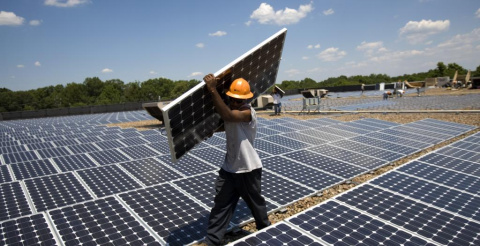
First, SMIN Power Group conducted a detailed audit and interviewed the customer to assess all the needs. The school daily energy need amounts to 42,000 Wh. Next, SMIN Power Group designed a stand alone solar photovoltaic system with energy storage and backup generator. The system consisted of a 9,000 Wp solar PV array, a battery bank with (28) 200Ah/12V deep cycle battery cells, charge-controllers with MPPT, (3) 3,000W inverters, and the control system. The backup generator would be used in case of need.
SMIN power Group also developed the cost estimate. Long term, the system reduces energy costs by 30% for the school community. Our solution is a one-time investment and has a payback of 9,5 years.
Our solution provides clean, reliable, cost effective and quiet electricity for the customer. SMIN Power Group is helping the community fight climate change to preserve the Earth for future generations. SMIN Power Group designed a system that will avoid 269 Metric Tons of greenhouse gas emissions over 25 years. According to the USA Environmental Protection Agency, this is equivalent to removing 56.9 cars off the road for a year. It is also equivalent to avoid the CO2 emissions from 30,307 gallons of gasoline.
Date
Comments

Add New Comment
Renewable energy in Africa
South Africa
The Library, Documentation and Information Department of the African Studies Centre has compiled this dossier to coincide with the NVAS AFRICA DAY 2015 – AFRICA and TECHNOLOGY on October 17, 2015. It contains a selection of recent titles on Renewable Energy in Africa from the library's online catalogue, including monographs, articles, and chapters from edited works, published since 2013. Each title links directly to the corresponding record in the online catalogue, which provides a more detailed description of every title as well as abstracts of articles and edited works. The dossier starts with an introduction to the topic, followed by sections on Renewable Energy Resources, Planning & Policies, and Local Impact stories illustrating how applied renewable energy technology can change lives as in the case of improved fuel efficient cook stoves and photovoltaics. The dossier concludes with a selection of links to relevant websites.
The interest among academics, policymakers and the general public in issues of renewable energy in Africa has surged in recent years. Technological advances, political and economic pressures, as well as environmental imperatives, have driven rapid growth in renewable energy production and supply. Important international agreements, such as the Kyoto Protocol and efforts to implement carbon credits, support the search for more renewable energy sources. On the African continent there has been a specific interest in hydroelectricity, as well as wind energy, solar energy, biofuels (such as jatropha oil), and fuel efficient cook stoves. Renewable energy debates have been linked to topics of sustainability and energy policy, but less frequently to existing discussions about natural resource management. In the policy arena, most African governments participate in discussions about renewable energy, and NGOs, such as AFREPREN (African Energy Policy Research Network), play an important role in lobbying and research. Research into renewable energy is conducted at prominent institutions, such as at the Department of Geography, Environmental Management and Energy Studies, the University of Johannesburg.
Despite growing interest in the broader theme of renewable energy, the academic debate continues to suffer from several weaknesses. The first is the gap between policymakers, practitioners and academics. Whereas there are numerous reports and extensive ‘grey literature’ on issues of renewable energy in Africa, there is a limited number of academic peer-reviewed work. Moreover, academics and practitioners are unwilling to share their results with each other. The second weakness is the distance between technical and social science approaches towards renewable energy. The vast majority of academic articles on issues of renewable energy come from the technical or exact sciences, for example, measuring the combustion efficiency or health impacts of improved cook stoves. The social sciences angle is often missing. In the debate on adopting improved cook stoves, this results in accusations of creating ‘cultural barriers’, whereas a social scientist can put such generic categories into context and emphasize specific cooking habits or natural resource management in different localities. Ethnographic and consumer research, questioning why renewable energy sources do or do not work, would be a valuable and a timely addition to the existing debate. Furthermore, a regional or comparative focus could be adopted more systematically. Whereas at present, case studies of renewable energy exist for various localities (West Africa, East Africa, Southern Africa), it is important that these case studies should be linked together, so that comparing their similarities or differences is more straightforward and thus a more effective continent-wide policy framework can be drafted.
Date
Add New Comment