
Scaling Green Technologies and Youth Employment in African Tech Startups: the Nigerian Solar Mini-Grid Sector
According to the Intergovernmental Panel on Climate Change (IPCC), Africa is one of the
continents most vulnerable to climate change and climate variability. African countries are
responding to this challenge through climate mitigation and adaptation and the development of
new sectors and industries. The resulting emergence of green industries and the deployment of
green technologies (green tech) present opportunities to address youth unemployment through
the creation of green jobs. For green tech to maximise youth employment creation in Africa,
government policies, regulations and strategies, as well as interventions by development
partners, enterprise support organisations and financial institutions, need to be attuned to the
needs of young people in green industries. Furthermore, there is a need for research examining
the linkages of youth, women and the applicability of Indigenous knowledge to innovation in the
green tech space.
This report aims to understand the key actors, policy context, barriers and enablers in the nexus
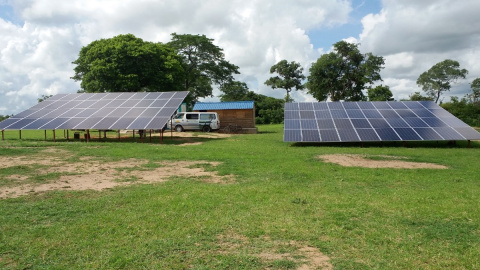
between green tech and youth employment. As a case study, it takes the Nigerian solar mini-grid
tech startup sector, which is capitalising on Indigenous and traditional knowledge to enhance
technological innovation for startups. The solar mini-grid industry was selected for this purpose
due to Nigeria’s progress and growing potential in renewable energy, particularly in off-grid
solutions. In fact, Nigeria is one of the largest markets for solar mini-grids in Africa. By 2024, the
country had over 155 mini-grids and at least 42 active developers, up from just 11 mini-grids and
five developers in 2015 (Nigeria Electrification Programme, n.d.b; Alliance for Rural Electrification,
2024). A significant increase in the number of mini-grids and developers is projected over the
next decade.
This study documents how the dimensions of policy, finance, skills and innovation shape youth
employment outcomes in Nigeria’s solar mini-grid sector. It first examines the current national
strategies and policy frameworks guiding the sector and how they shape opportunities for youth
employment. This focus is vital, given Nigeria’s urgent need to expand energy access while
tackling high youth unemployment. The study then assesses how Nigeria’s burgeoning tech
startup ecosystem could act as a catalyst for scaling green tech and creating job pathways within
the solar energy sector, before investigating the roles that solar tech startups are playing in this
space, as well as the factors either promoting or hindering their contribution to innovation and
development. To fully understand these outcomes, the study also examines cross-cutting factors
– particularly gendered barriers and the role of Indigenous knowledge – that shape which young
people are able to access, participate in or benefit from emerging opportunities in the sector.
Add New Comment