
Case Study on Policy Reforms to Promote Renewable Energy in Morocco
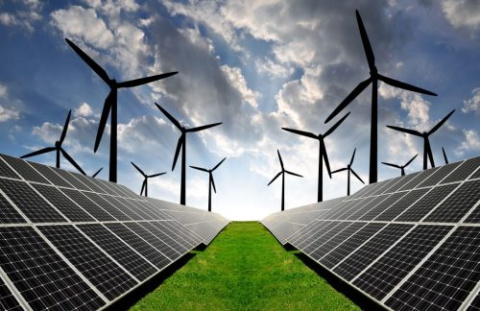
The present Moroccan case study aims to show the impact of Moroccan policies on encouraging investments in renewable energy by lifting the regulatory barriers and providing an enabling legal and business environment for the development of renewable energy projects and the needed policy reforms.
As the only North African country with no natural oil resources, Morocco is the largest energy importer in the region. The country is faced with the challenging task of meeting rising local demand while keeping its import bill under control. Environmental constraints (water stress, land degradation, strong energy dependence, vulnerability to climate change, various types of pollution) are the key issues for Morocco, which has made the green economy a strategic focus of its sustainable development policy.
Driven by the rise in energy demand, primary energy supply has been steadily rising in Morocco over the last decade, and reached about 19.5 million tons of oil equivalent (toe) in 2015 while it was only 16.1 million toe in 2010. Oil products account for 54%. Due to economic and industrial development, demographic growth, improved access to electricity (improving from 18% in 1995 to 99.15% in 2015) and the diffusion of household appliances, primary energy demand is expected to continue the rapid growth with a growing rate of 4.3% in the baseline scenario and 3.3% in the energy-efficiency scenario.
With currently no proven gas or oil reserves, Morocco relies heavily on fossil-fuel imports, which represent 93.6% of the total primary energy supply1. The electricity generation balance consists predominantly of thermal generation (coal: 49%, natural gas: 16.5%, oil: 6%) while 15% of the electricity demand is imported from Spain. The renewable energy contribution in the energy mix was about 13.5% in 2015 (including large and small hydro). Total carbon dioxide (CO2) emissions were estimated at 60 million tons in 2015, which was dominated by the consumption of oil products.
Facing these challenges, the Moroccan Government developed in 2009 the National Energy Strategy, setting clear and precise objectives. The Strategy covers four main strands: optimize the fuel mix in the electricity sector; accelerate the development of energy from renewable sources, especially wind, solar and hydropower; make energy efficiency a national priority; and promote a greater regional market integration.
In 2009, the corresponding targets for renewable energy were set for 42% installed capacity by 2020 (or 6,000 MW). These targets were revised in 2015 to become 52% (or 12,900 MW) by 2030.Two ambitious programmes were developed to boost Morocco's solar and wind development:The Moroccan Solar Plan (Noor) that aims to reach 2,000 MW installed solar power capacity (solar photovoltaic (PV) and concentrated solar power (CSP) by 2020 and approximately 4,800 MW by 2030 (additional 4,560 MW from 2016 to 2030);The Moroccan Integrated Wind Programme that aims to achieve 2,000 MW installed wind-power capacity by 2020 and up to 5,000 MW by 2030 (additional 4,200 MW from 2016 to 2030).
For easy integration of these renewable capacities into the grid, Morocco intends to spend US$ 700 million for a programme of 1,000 MW pump storage power plants (PSPPs) and US$ 3.5 billion to reinforce the transmission network until 2030.
Moreover, Morocco is developing a gas-to-power project consisting of a liquefied natural gas (LNG) terminal of 5 billion m3 and four combined cycle gas turbines (CCGTs).CCGTs totalling 2000 MW are to be delivered by 2025. Their flexibility will help to overcome the technical constraints and intermittency generated by the intensive expansion of renewable energy.
In the light of these programmes, multiple large- and medium-scale solar and wind projects were already installed at the end of 2015: 977 MW of wind and 180 MW of solar energy. These two programmes were designed to take advantage of Morocco’s highly favourable conditions for both wind and solar power, as well as its long established hydropower sector. Morocco has important renewable energy resources. Windenergy potential is excellent in vast stretches of the northern and southern regions, with annual average wind speed exceeding 9 m/s at 40 m elevation along its 3,500-km coastline. As far as solar power is concerned, the country enjoys 3,000 hours per year of sunshine, potentially yielding 5.5 kWh/m²/day.
Add New Comment