
Powering Regional Integration: New G20 Best Practices Booklet Charts a Practical Path for Cross-Border Power Systems
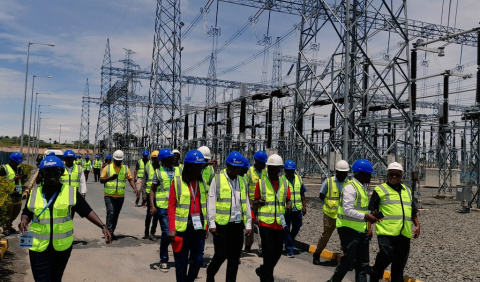
The African Development Bank Group, in partnership with the International Energy Agency (IEA) and South Africa’s G20 Presidency, has released the G20 Booklet of Best Practices on Regional Power System Interconnectivity—a timely and practical guide for policymakers, regulators, utilities and development partners working to strengthen regional power trade. The publication is a formal publication of the G20 Energy Transitions Working Group (ETWG), Priority Area 3.
Across the world, countries face a triple challenge: how to deliver reliable, affordable and sustainable electricity while demand rises and climate impacts intensify. The Booklet demonstrates how regional power system integration can become a powerful part of the solution—helping countries share resources, enhance energy security, improve system resilience and accelerate the clean energy transition through structured cross-border collaboration.
A practical framework for decision-makers
Drawing from global case studies, technical research and extensive virtual consultations with experts and African stakeholders, the Booklet offers a high-level but actionable framework for those who design, regulate and operate regional power systems.
A major theme is the distinction between interconnection and integration. While grid links are an important first step, long-term benefits are only realised when countries also align system planning, operations and regulatory frameworks.
To support this, the Booklet is organised around five interlocking dimensions:
- Political will and long-term commitment
- Institutional frameworks and governance
- Harmonisation of technical and operational standards
- Cross-border electricity market development
- Co-ordinated regional planning and investment
Each dimension includes diagnostic tables and priority actions that help countries assess their current stage of integration and identify the next practical steps.
Global lessons, tailored for Africa’s priorities
The Booklet draws from a diverse set of regional integration experiences—from Europe, the Nordic market and North America to ASEAN, the Gulf and Central America. These examples illustrate how different governance models, market designs and technical standards can successfully underpin regional power systems.
As a hallmark of the G20 Presidency of South Africa, the Booklet dedicates a full section to Africa, recognising that regional power integration is essential to achieving the continent’s Mission 300 goal of connecting 300 million people by 2030.
This Africa-focused section underscores:
- The key role of SAPP, WAPP and EAPP in reducing costs, integrating renewables and improving reliability
- The importance of continental initiatives such as PIDA, the Continental Power Systems Master Plan, and the African Single Electricity Market
- The need for a sequenced approach—starting with political trust, early pilot trades and technical safety, and gradually deepening institutional and market harmonisation
The Booklet also highlights emerging financing mechanisms such as regional funds and blended-finance platforms, including the planned Regional Transmission Infrastructure Financing Facility (RTIFF) under SAPP, which will help crowd in finance for high-cost, cross-border transmission projects.
Seven success factors and a call to action
Synthesising insights from global experience, the Booklet identifies seven critical success factors—from committed political leadership and strong institutions to technical harmonisation, phased market development and innovative financing frameworks.
It emphasises that regional power interconnection is one of the most impactful long-term investments countries can make. When supported by political consensus, regulatory alignment and coordinated planning, regional systems deliver expanded access, lower costs, greater renewable energy uptake and stronger resilience.
Download the Booklet now here . Governments, regulators, utilities, regional institutions and financiers are encouraged to apply its diagnostic tools, understand their current integration stage, and choose two or three priority actions to unlock the next level of regional cooperation.
For the African Development Bank Group, this G20 outcome is more than a reference document. It is a practical tool to support Regional Member Countries, power pools and partners as we work to deliver affordable, reliable and sustainable electricity to millions more people across the continent. By turning best practices into real projects, reforms and investment pipelines, regional power integration can move from concept to reality—advancing a future where Africa’s energy systems are interconnected, resilient and leave no one behind.
Add New Comment