
Under Construction
LIST OF DEVELOPERS
NEWS
Solar plant and wind farm to solidify renewable energy mandate in Egypt
CategoryStories
CountryEgypt
TagsFinance and Investment, Regulatory and Governance, Renewable Energy
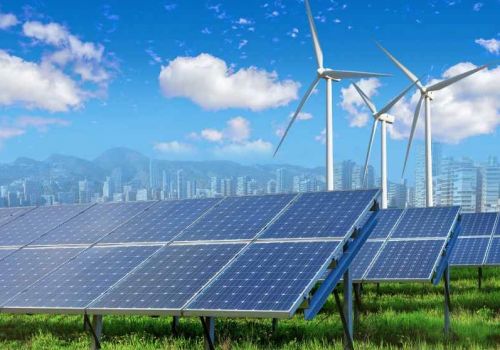
What will be the largest solar plant and wind farm in Egypt has reached financial close with a $1.1 billion investment.
One million Egyptians will soon gain access to clean energy thanks to a $1.1 billion financing package (including debt and equity), financed by International Finance Corporation (IFC), part of the World Bank Group, Dutch Entrepreneurial Development Bank (FMO) and the Japan International Cooperation Agency (JICA).
The financing package will support UAE-based AMEA Power to build, own and operate twin solar and wind plants in Egypt, delivering more than 1GW of renewable energy at the lowest price in Africa.
When built, the 560MW Abydos Solar PV and 505MW Amunet Wind independent power projects, which will be Egypt’s largest of their kind, will generate over 4,000 gigawatt-hours per year of power. Power from the solar park and the wind farm will be priced at 2 US cents/kilowatt hour and 3 US cents/kilowatt hour, respectively, which are the lowest rates in Africa and among the least expensive rates globally.
The Abydos and Amunet renewable energy power plants will reduce Egypt’s carbon footprint by 1.7 million tons of greenhouse gases annually.
“These projects highlight the private sector’s essential role helping to deliver clean, affordable power, especially at a time of growing challenges from climate change and pressures on the environment,” said Cheick-Oumar Sylla, IFC Regional Director for North Africa and Horn of Africa. “Egypt has ambitious renewable energy goals and we are proud to support AMEA’s expansion into Africa as well as its partnership with Egypt to accelerate the country’s renewable energy transition.”
Financing Egypt’s largest renewable energy project
The investment includes loans from the IFC of up to $145 million to the Abydos Solar Company and the Amunet Wind Power Company, subsidiaries of AMEA Power. As the hedging organisation for both projects, IFC is also removing most of the risk of rising interest rates by swapping the variable interest rate for a fixed rate for the term of loans for the combined packages.
As mandated lead arranger, IFC mobilised up to $160m in long-term loans from the Japan International Cooperation Agency and the Dutch Entrepreneurial Development Bank (FMO) to support the solar project. For the wind project, IFC mobilised over $500m from the Japanese Bank for International Cooperation and from three commercial banks – Sumitomo Mitsui Banking Corporation, Sumitomo Mitsui Trust Bank and Standard Chartered Bank—under insurance cover from Nippon Export Investment Insurance and a working capital facility from the Commercial International Bank of Egypt.
The projects will underpin the renewable energy ambitions of Egypt, along with supporting economic and social development within the region. The Egyptian government is working towards increasing the supply of electricity generated from renewable sources to 42% by 2035.
Solar plant and wind farm should start producing power within two years
The Abydos project will be situated near Kom Ombo in Egypt’s Aswan governorate, while the Amunet project will be built in Egypt’s wind-rich Gulf of Suez region. Construction of both projects is scheduled to begin in December 2022, with the solar plant expected to be complete in 18 months and the wind farm in 30 months.
“Reinforcing the power of international partnerships and shared ambition, the agreements for two wind and solar renewable energy projects signed with the IFC and AMEA Power, signal our commitment to the green transition, while also showcasing the depth of climate finance opportunities in Egypt and the crucial role of private sector engagement in accelerating the climate agenda on a national level.
“Moreover, both projects reflect the interlinkages and complementarity between climate action and development efforts and highlight the importance of mobilising innovative financing modalities that offer an opportunity for the international community to support the climate agenda,” said Minister of International Cooperation and Governor of Egypt at the World Bank Group Dr Rania A. Al-Mashat.
AMEA Power has also recently signed a Framework Agreement with the Egyptian Government, on the sidelines of the United Nations Climate Change Conference (COP27) in Sharm El-Sheikh, to develop a large-scale green hydrogen project, which will serve as a feedstock for the production of green ammonia. Once completed, the 1GW plant will be able to produce 800,000 tons of green ammonia per year for export.