
Under Construction
LIST OF DEVELOPERS
NEWS
Nigeria: High bills stifle 5m power users as FG’s N27bn meter project hangs
CategoryPress Releases
CountryNigeria
TagsElectricity tariffs, Energy Access
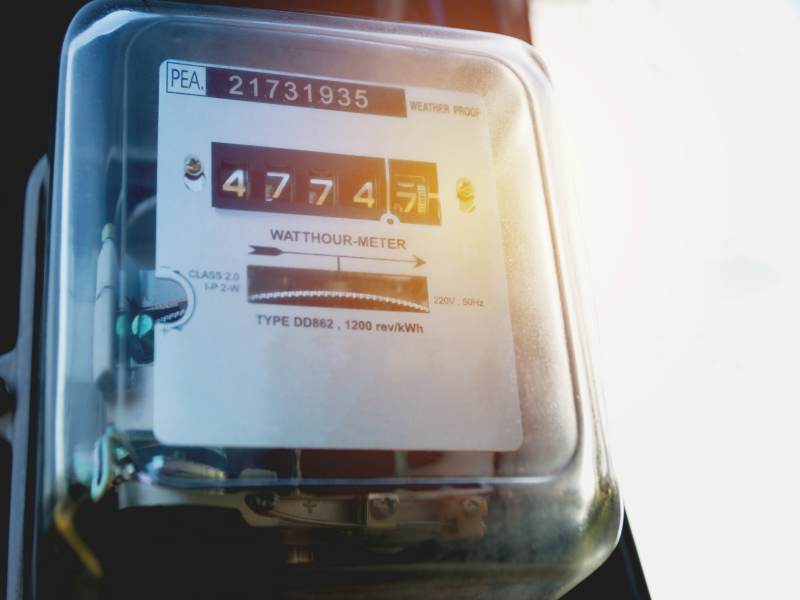
A N27 billion meter supply contract initiated by the federal government to provide meter intervention to electricity users in Nigeria is yet to be implemented five years after, the Daily Trust reports. This is just as at least 5 million Nigerians out of 8.8m registered electricity users remain without meter devices as they grapple with high monthly electricity bills from the 11 privately operated Distribution Companies (DisCos).
Under the present Meter Assets Providers (MAP) regulation, customers of DisCos can buy a single phase meter for about N38,000 and three phase meter goes for N70,000.
At these rates, the N27bn metering scheme initiated by the Federal Ministry of Power in 2015, could have bought 700,000 units of single phase meters at N26.6bn or 380,000 units of three phase meters at N26.6bn.
That could have cut the 5m metering gap to either 4.3m or 4.62m in the past five years.
Uncertainty over metering scheme
In November 2013, when the Nigerian government privatized the power sector, part of the vision for the programme was for the Nigerian electricity users to be metered. Lamentations by customers about ‘crazy’ and ‘exploitative’ billing have continued after the power privatization. This compelled the federal government to initiate paid meter acquisition initiatives and a meter supply scheme.
The meter supply scheme was conceived in 2011 but became pronounced in January 2015, when the then Minister of Power, Prof. Chinedu Nebo in Abuja announced the Federal Government’s plan to inject one million meters into the power sector to reduce the metering gap which was over 4m.
By May 20, 2015, the Federal Executive Council (FEC) under former President Goodluck Jonathan, approved contract for the supply and installation of 753,002 prepaid electricity meters worth N27 billion. The prepaid meters were meant to be distributed to electricity customers through the 11 DisCos.
According to procurement records obtained from the Bureau of Public Procurement (BPP), seven companies got the contract and they include, Ziklagsis Network Ltd (ZNL), Electricity Meter Company Nigeria Plc, Norman Electricity Meters, and Mojec International Ltd. The rest are Unistar Hi-Tech Dystems Ltd ENL Consortium Ltd and Lysander Or-Tech Nigeria Ltd.
They were mandated to supply 376,501 single phase meters at N8.3bn, and another 376,501 units of three-phase meters at N18.8bn. The Federal Government sourced $200m Eurobond along with $88.6m to be gotten from the sales of the 10 National Integrated Power Projects (NIPPs) plants, which did not happen. But nearly five years after the procurement process, there is no public record that the meters have been supplied and no customer can say he has benefitted from the meter intervention scheme.
Daily Trust contacted the power ministry through a letter of disclosure in the spirit of the Freedom of Information (FOI) Act on 13th November, 2019. The letter was duly acknowledged by the ministry but even with several follow-ups, the ministry failed to provide this newspaper with the meter contract information, thereby violating the FOI Act.
Our reporter gathered that the contract had been caught in litigations among the parties but that the erstwhile minister, Babatunde Fashola had resolved the issues shortly before the launch of the current MAP regulation.
How metering gap widens
Our findings showed that efforts to close the presently over 5m metering gap are unyielding. Beside this botched meter supply scheme, the Nigerian Electricity Regulatory Commission (NERC) has initiated two paid meter installation initiatives.
To bridge the about 4.92m metering gap in 2013, NERC introduced the Credited Advance Payment for Metering Implementation (CAPMI), targeting the gap closure in three years. Under CAPMI, interested customers can pay N24,000 for single phase and about 60,000 for three phase meters. They will get the meters installed, stop paying the estimated bill, get refund for their money whenever they recharge the meter, and get a 12 percent interest plus the entire refund in about five years from the DisCo.
But that was wound up in November 2016 when it was found that over half of those who had paid had not gotten the meters, and those who had meters don’t get refunds or the rebate.
The metering gap skyrocketed and there was need for another intervention. NERC then unveiled MAP on April 8, 2018 but it did not begin till May 2019. Now private firms sell meters to customers under the DisCos’ guide at average N38,000 (single phase) and N70,000 (three phase).
Metering schemes unsuccessful
For MAP, a customer ought to pay, get verified and be metered in 10 working days. But they will not still own the meter neither can they transfer it, if they choose to relocate from a premises, the NERC regulation says. Analysis of data on metering obtained from NERC shows that the metering schemes have not yielded the desired results.
Between November 2013 and December 31, 2017 4.7m consumers were not metered. That represented 55 percent of the about 8m registered consumers. The 11 DisCos were to provide 4.92m meters by installing 1.640m meters annually. But they failed to attain this target.
The NERC quarterly report for June 2019 shows that there were 8.88m registered active electricity users of which only 3.8m (42.92%) have meter. The other 5m users (57.08%) don’t have meter and are stifling under the DisCos’ estimated billing methodology, often with customer complaints of high bills.
Within the quarter, only 17,834 new meters were installed and NERC said it was not enough to close the metering gap in three years being targeted.
High bills: Meters not for the poor, rural dwellers
Investigations by Daily Trust showed that millions of rural and semi urban dwellers are at the mercy of estimated billing from the DisCos as they live without meters. In Kano State, for instance, findings reveal that Kano DisCo sell single phase for N38,841 and three-phase meter for N70,408.
Some households and small scale business outlets pay over N5,000 monthly as bills amidst frequent outages.
Malam Yusuf Isa Sa’ad, a tailor at Tukuntawa, one of the slums in Kano Municipal Area Council pays N5,000 monthly as estimated bill. “I was asked to bring N40,000 for the device, but I was told they have been exhausted, that I should come again, I went back several times but I still could not get it so I gave up and continued paying N5,000 estimated billing” Sa’ad explained. Zubair A. Zubair, a barber at Tukuntawa runs his shop on generator owing to poor electricity even when the bills are going higher. He also gave up meter acquisition after several attempts.
Alhaji Ali Muaz Tamasi who is the Secretary General Tudun Yola Community Development Association in Gwale LGA said he has pushed for over two years to acquire meter but is discouraged by the attitude of KEDCO staff and shoddy practices.
In the Southwest, our reporter gathered that prepaid meters are mostly available to metropolitan dwellers while residents in the rural areas find it costly to buy. For instance, in Oyo, Ibadan Electricity Distribution Company (IBEDC) customers buy meters at Ibadan for N38,350 through a cumbersome process. Customers then cut that to buy at N55,000, it was learnt.
It’s a different story outside the capital. A resident of Ido LGA, Atanda Adebayo said, “I have been requesting for meter since last year but what they told me was that it is not available. However, I got it when I eventually paid extra money. “The reason for me struggling to get one is the fact that their officials have seen some of the houses without prepaid meters as ATM. I paid N55, 000 as against the official price of N38, 000, in the state,” Adebayo said.
Hammed Jubril of Agbowo town in the state lamented delay in distribution of meters in the area, saying it was a ploy to collect extra money from residents.
A journalist with Radio Nigeria in Saki area, Bashiru Sulaiman said prepaid meter in Saki axis is like gold. Similar complaints were lodged to our reporter during a survey of metering and estimated billing issues, in many parts of the South East and South South.
For instance, a resident of Thinkers’ Corner, near Emene on the outskirts of Enugu metropolis Mr. Maurice Okafor said Enugu DisCo gives him N12,000 to N19,000 bill monthly “I complained and made case and was advised to apply for the prepaid metre. The application lasted till four months before the meter was installed,” Okafor said.
Another resident of One-Day Road, Enugu South LGA, Mr. Chris Oji has seen the difference after he had meter installed in his premises.
“All I can say is that I pay far less now. Right now, I recharge my light with N1,500 which will last one month for me but during the estimated billing era, I used to pay N11,000 to N15,000 per month.”
We’re doing our best to meter customers – DisCos Some of the DisCos’ officials said they are at their best in ensuring the customers have meter. They said NERC has set a three year deadline of 2021 for them. Among these is the spokesman of Kano DisCo, Ibrahim Sani Shawai. He said said five MAP firms have been engaged to fast track the metering across Jigawa, Kano and Katsina.
“Soon all customers who need meters would have them.” Emeka Ezeh, the spokesman of Enugu DisCo said the MAP scheme is designed to close the metering gap and that his firm is on track.
This report is supported by the Daily Trust Foundation & The MacArthur Foundation.