
Under Construction
LIST OF DEVELOPERS
NEWS
Botswana advances from commitments to delivery on its National Energy Compact through Mission 300 workshops
CategoryPress Releases
TagsEnergy Access, Finance and Investment, Regulatory and Governance, Renewable Energy, Rural Electrification
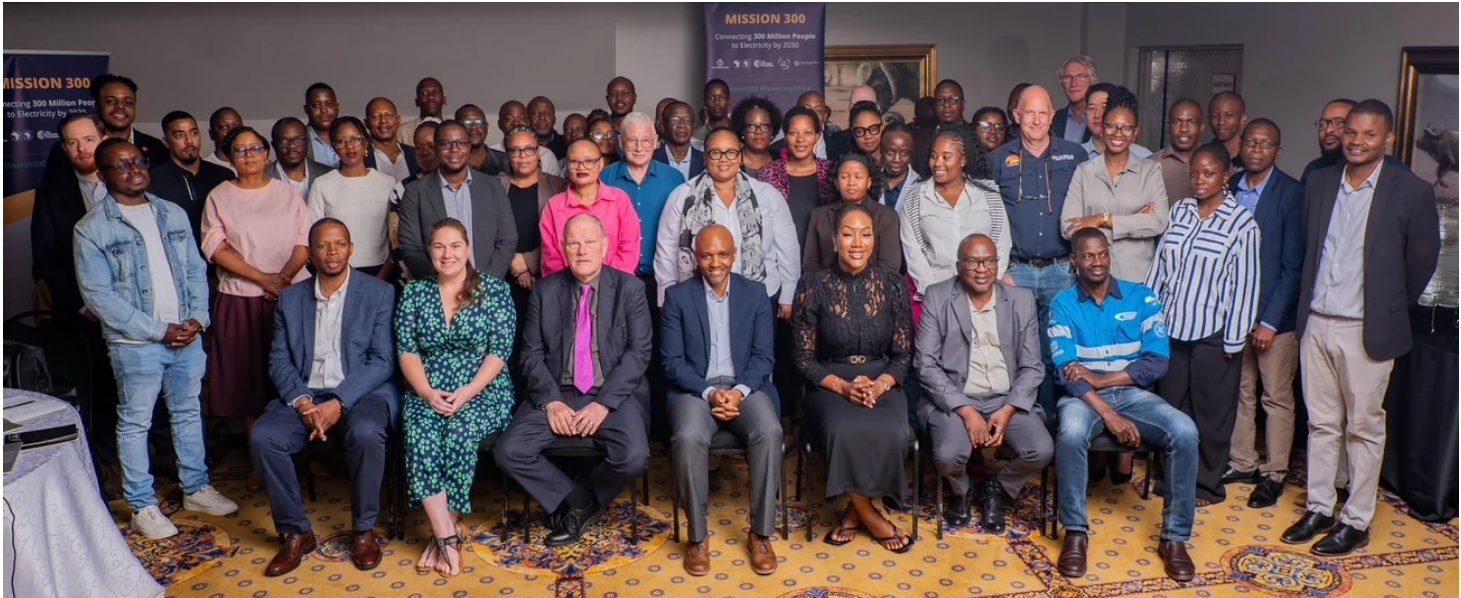
Botswana has convened key government institutions and energy-sector stakeholders for two days of technical discussions to strengthen implementation of its National Energy Compact under Mission 300, and to accelerate progress towards a more reliable, affordable and diversified energy system by 2030.
Mission 300, jointly led by the African Development Bank Group and the World Bank Group, aims to connect 300 million more people in Africa to electricity by 2030. Each participating country’s National Energy Compact sets out its targets and reforms, and a Compact Delivery and Monitoring Unit (CDMU) drives implementation.
The Compact Implementation Support Workshop, held on 29–30 October 2026, was hosted by the Ministry of Minerals and Energy through its CDMU and facilitated by Sustainable Energy for All (SEforALL). It was supported by the African Development Bank Group under its Africa Energy Sector Technical Assistance Program (AESTAP).
Wale Shonibare, Director of Energy Financial Solutions, Policy and Regulation at the African Development Bank Group, said, “Botswana’s National Energy Compact provides an important framework for advancing energy access, strengthening power-system reliability and mobilising investment. The priority now is to translate these commitments into coordinated, implementable actions, supported by clear institutional responsibilities, effective monitoring and strong partnerships. Through our support under AESTAP and Mission 300, the African Development Bank is committed to working with Botswana and its partners to strengthen implementation capacity and accelerate progress towards the country’s 2030 energy ambitions.”
From commitments to coordinated delivery
Botswana’s Compact commits the country to raising electricity access from 76.6% to 100%, clean cooking access from 66.6% to 90% and the renewable share of generation from 8% to 50% by 2030 – connecting around 220,000 additional households and bringing clean cooking to 260,000 more.
Meeting these targets will cost an estimated US$2.06 billion to US$2.98 billion, of which US$646 million to US$1.57 billion is expected to come from the private sector. The proposed investments span electricity generation, transmission and distribution networks, household electrification, off-grid solutions, clean cooking and technical assistance. Achieving these ambitions will require coordinated action across government ministries, implementing agencies, utilities, regulators, development partners and private-sector investors.
Progress is already visible: household electricity access has risen from 76.6% to 80.8%, the National Electrification Action Plan (NEAP) was finalised in August 2026, the 100MW Mmadinare Solar Cluster and the 100MW Jwaneng solar plant are now operational, and ground was broken in April 2026 on the 500MW Maun solar and battery energy storage project.
Mr Midas Sekgabo, Acting Permanent Secretary, Ministry of Minerals and Energy, said, “Botswana’s ambition under the National Energy Compact is not in question, our delivery is. Over these two days, we asked for a plan for delivery, not a report on the Compact. We leave with a draft Compact Implementation Support Document that Government owns and a twelve-month workplan we are prepared to be measured against, in which every action has an owner, a deadline and an escalation route. A family in one of the 94 villages still without electricity will not judge us by our workshops. They will judge us by the day the lights come on and the cooking smoke clears.”
Discussions during the workshops examined progress on priority reform actions, implementation bottlenecks, project readiness, investment requirements and technical assistance needs. Participants also looked at the operational relationships between the CDMU and the institutions responsible for delivering on Compact commitments. A key focus was the preparation of a draft Compact Implementation Support Document (CISD), designed to translate national commitments into sequenced, actionable priorities.
Strengthening accountability and institutional coordination
The workshop also covered monitoring, reporting and accountability arrangements, including the country’s biannual Compact Progress Report (CPR) cycle, implementation review mechanisms, escalation pathways and processes for resolving delivery bottlenecks.
Participants examined opportunities to strengthen coordination among development partners and private investors, align technical assistance with institutional needs, improve the readiness of energy projects and identify financing for priority investments.
The Botswana workshop was the fifth of six in the series, following those in Kenya, Ghana, Côte d'Ivoire and Senegal. The sixth and final workshop took place in Sierra Leone on 13–14 November 2026.
About the African Development Bank Group
The African Development Bank Group is Africa’s premier development finance institution. It comprises three distinct entities: the African Development Bank (AfDB), the African Development Fund (ADF), and the Nigeria Trust Fund (NTF). With a presence in 41 African countries and an external office in Japan, the Bank contributes to the economic development and social progress of its 54 regional member countries. For more information: www.afdb.org
About Sustainable Energy for All
Sustainable Energy for All (SEforALL) is an international organization hosted by UNOPS, working in partnership with governments and stakeholders to accelerate sustainable energy transitions, improve livelihoods, create jobs, strengthen economies, and combat climate change. For more information: www.seforall.org